Are Bernedoodles Hypoallergenic? An Honest Answer
By Zach, Z and Z Doodles · · 5 min read
It is one of the questions we hear most: are Bernedoodles hypoallergenic? As a family breeder, I want to give you the honest answer rather than a sales pitch, because allergies are a serious matter and the wrong dog is hard on everyone, including the dog.
The honest answer
No dog is completely hypoallergenic. That is true of every breed, including Poodles. What is true is that many Bernedoodles shed very little, and many allergy-sensitive families find them much easier to live with than heavy-shedding breeds. Easier is not the same as guaranteed.
What actually causes dog allergies
People are not usually allergic to dog hair itself. The triggers are proteins found in a dog's skin cells (dander), saliva and urine. Hair carries those proteins around the house, which is why a dog that sheds a lot can spread more allergen. A dog that sheds less can mean less allergen scattered on your couch, carpet and clothes.
Because the proteins come from the dog itself, even a low-shedding dog still produces some. Reactions also vary enormously from one person to the next, and even from one dog to the next.
Why Bernedoodles often do well
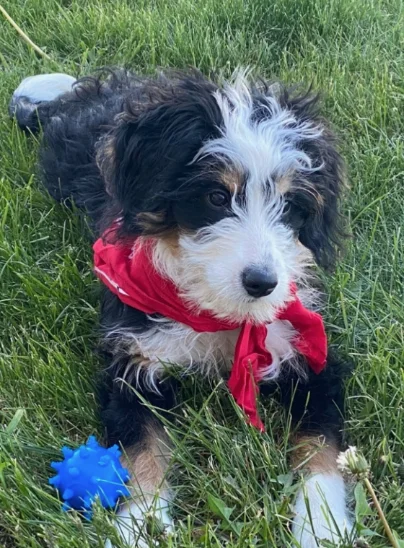
The Poodle side contributes a wavy or curly coat that tends to hold loose hair rather than dropping it everywhere. Many Bernedoodles shed very little as a result. Wavy and curly coats typically shed the least, while straighter coats can shed more.
That caught hair needs to be brushed out regularly, or it mats. Regular brushing and grooming also remove dander and keep the coat clean, which helps allergic households.
Coat type matters
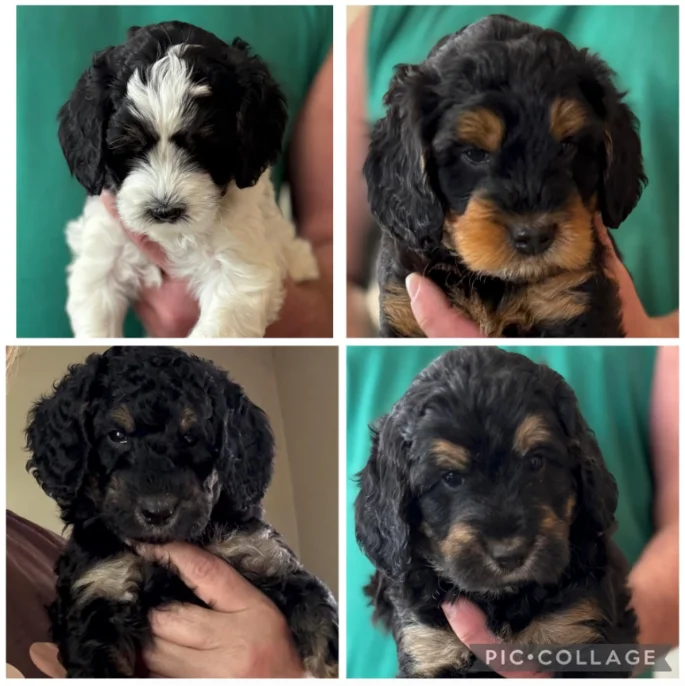
Not every Bernedoodle puppy gets the same coat. Even within one litter you can find curly, wavy and straighter coats. If allergies are your main reason for choosing this breed, tell your breeder. A wavy or curly coat is usually the better bet, and an honest breeder will not promise a result they cannot control. You can read more about coats in our guide to what a Bernedoodle is.
Test before you commit
The best advice I can give is to spend real time around a Bernedoodle before you bring one home. Sit with the dog, pet it, and see how you feel over several hours, not several minutes. If someone in your family has significant allergies or asthma, talk with your doctor first.
We are glad to talk about arranging a visit with our family so you can meet our dogs. Message us through our contact page.
Tips for living with a dog when you have allergies
Even with a low-shedding dog, a few habits make a big difference:
- Brush your dog several times a week, ideally outdoors
- Bathe on a regular schedule, usually every four to six weeks
- Wash dog bedding and blankets often
- Vacuum regularly, ideally with a HEPA filter
- Keep the dog out of the bedroom if you are sensitive
- Wash your hands after petting and playing
None of these replace advice from your doctor, but together they can keep allergens down.
Low shedding is not low maintenance
One thing families sometimes miss: the same coat that sheds less needs more grooming. Plan to brush frequently and visit a groomer every six to eight weeks or so. If you skip it, you will get mats, and a matted coat is uncomfortable for the dog and does nothing for your allergies.
Quick answers
Will a Bernedoodle make my allergies go away? No. Many people react less to them, but reactions are personal and no dog can be guaranteed safe for allergic people.
Does a curly coat always mean fewer allergens? Not always. Curly coats tend to shed less, but dander and saliva still exist. That is why time spent with the dog matters more than any coat label.
Should I choose an adult dog instead? An adult's coat and size are already known, which can make allergy testing more reliable. If a puppy is your heart's choice, talk to us about what each coat is showing as the litter grows. Either way, take your time, ask your doctor and meet the dog more than once before deciding.
Our approach
We raise our puppies in our home and we pair our dogs for temperament, structure and health. We cannot promise any individual puppy will be perfect for an allergic person, and we will never tell you otherwise. What we can do is talk through your situation honestly, tell you what we see in each coat as the pups grow, and help you decide.
If allergies are a factor for your household, send us a note on the contact page before you join the waitlist. You can also see our other answers on allergies in the FAQ, or browse available puppies.
Zach and his family raise Bernedoodle puppies at home in Central Illinois. Every puppy is health-tested, raised underfoot, and backed by lifetime breeder support. Meet the family.